
Introduction
A cloudburst is one of the most sudden and destructive meteorological events known to humankind. Defined as an extreme rainfall event where more than 100 millimeters of rain falls within an hour over a small geographical area, cloudbursts are capable of unleashing devastation in minutes. These events are usually localized, making them difficult to predict and even harder to prepare for. The consequences are often catastrophic: flash floods, landslides, destruction of infrastructure, agricultural losses, and in many cases, significant loss of human lives.
Mountainous Regions
Although cloudbursts have been observed for centuries, the frequency, scale, and impacts have increased in recent decades. Scientists link this rise not only to natural meteorological processes but also to climate change, rapid urbanization, and environmental degradation. In mountainous regions like the Himalayas, Alpine Europe, and the Andes, the risks are especially high because the combination of steep slopes, fragile geology, and human settlements in vulnerable zones magnifies the destructive power of such rainfall events.
Meteorological Causes of Cloudbursts
The formation of a cloudburst is not due to a single factor but a combination of meteorological and geographical processes. Understanding these mechanisms is essential for predicting and mitigating the risk.
Orographic Lift
One of the most common triggers of cloudbursts in mountainous regions is orographic lifting. When moist air masses are forced to rise due to mountain ranges, the air cools rapidly, leading to condensation and heavy rainfall. In the case of a cloudburst, this rainfall becomes extremely concentrated. The Himalayan region is highly vulnerable because monsoon winds from the Indian Ocean collide with the steep slopes, creating conditions favorable for cloudbursts. The Leh cloudburst of 2010 is a tragic example where this mechanism played a central role.
Convective Instability
Another key driver is convective instability, which occurs when warm, moist air near the ground rises rapidly into cooler atmospheric layers. The upward rush of air forms towering cumulonimbus clouds capable of holding massive amounts of moisture. When the clouds can no longer sustain this load, rain falls in sudden torrents. This type of cloudburst is often observed in both tropical and subtropical regions, where high surface temperatures feed intense convection.
Wind Convergence and Moisture Influx
Cloudbursts can also form due to the convergence of winds carrying moist air from different directions. When such winds collide, they force the air upward, accelerating condensation and rainfall. During the Uttarakhand disaster in 2013, the interaction of monsoon winds with westerly disturbances intensified precipitation, leading to floods and landslides that wiped out entire towns.
Aerosols and Atmospheric Microphysics
Recent research highlights the role of aerosols and microphysical processes in cloudburst formation. Aerosols—tiny particles of dust, soot, and pollution—act as condensation nuclei, around which water droplets form. The higher the concentration of aerosols, the larger and more unstable the water droplets become, often leading to sudden and heavy precipitation. Additionally, ice particles and supercooled water within clouds create microphysical imbalances that cause localized rainfall bursts. Studies conducted in the Himalayas, as well as in polluted urban areas, confirm that human-induced emissions may intensify the risk of cloudbursts.
Climate Change and the Growing Risk
The growing consensus among scientists is that climate change is directly influencing the frequency and intensity of cloudbursts.
Warmer air holds more moisture. According to the Clausius-Clapeyron relation, for every one-degree Celsius increase in temperature, the atmosphere can retain about seven percent more water vapor. This additional moisture translates into more intense rainfall events. Climate models predict that as global warming continues, cloudbursts will not only become more frequent but will also occur in regions previously considered low risk.
Urbanization further compounds the problem. Concrete structures, asphalt roads, and reduced green cover create urban heat islands, which intensify convection and alter local wind patterns. This phenomenon has been observed in major metropolitan areas such as Delhi, Mumbai, and Beijing, where short-duration rainfall events increasingly resemble cloudbursts.
The Intergovernmental Panel on Climate Change (IPCC) has projected a sharp increase in extreme rainfall events across Asia, Africa, and Europe by 2050. These projections also warn of greater unpredictability, meaning that areas unaccustomed to such events may face sudden risks.
Historical Case Studies
Leh Cloudburst (2010)
In August 2010, Leh in the Ladakh region experienced an unprecedented cloudburst that dumped approximately 250 millimeters of rain in just two hours. Ladakh, usually an arid cold desert, was unprepared for such rainfall. Flash floods and mudslides followed, killing more than 250 people and destroying homes, schools, and vital infrastructure. The disaster highlighted the vulnerability of fragile ecosystems to sudden weather extremes.
Uttarakhand Disaster (2013)
In June 2013, Uttarakhand in northern India suffered one of the most catastrophic cloudburst-linked tragedies in history. With nearly 340 millimeters of rain in less than 24 hours, combined with glacial melting, the event triggered massive floods around Kedarnath. More than 6,000 people died, thousands went missing, and infrastructure worth billions was lost. This event underlined the compound effects of heavy rainfall, glacial retreat, and unregulated construction in ecologically fragile areas.
European Floods (2021)
Cloudburst-like rainfall was also observed in Europe in July 2021, particularly in Germany and Belgium. Within six hours, certain regions received up to 150 millimeters of rainfall, far beyond the capacity of rivers and drainage systems. Over 220 people lost their lives, and the economic damages crossed 40 billion dollars. Attribution studies confirmed that global warming significantly increased the likelihood of such intense rainfall events in Europe.
Catastrophic Cloudburst in Buner (August 2025)
In mid-August 2025, Buner district in Khyber Pakhtunkhwa witnessed one of the deadliest cloudbursts in recent memory. Within barely an hour, more than 150 millimeters of rain crashed down over the valleys and foothills. What followed was not just heavy rain but a chain of destruction—walls of water swept away villages, bridges, vehicles, and farmland. Entire communities were submerged before residents even had a chance to escape. Local officials have confirmed over 300 deaths so far, with Buner alone accounting for more than 200 casualties. Survivors describe scenes of chaos, with families clinging to rooftops while landslides cut off access roads, leaving rescuers struggling to reach the worst-hit areas.
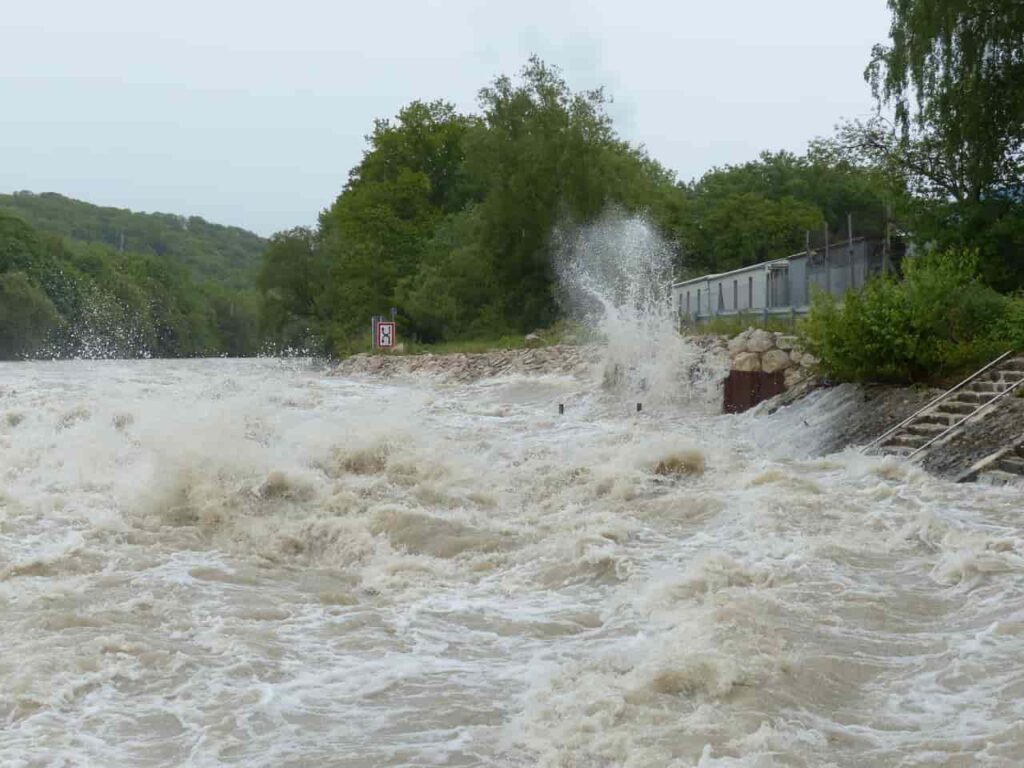
Wider Flash Flooding Across Northern Khyber Pakhtunkhwa
This cloudburst was not an isolated event. Northern KPK has endured weeks of extreme monsoon flooding, and the human toll has been staggering. Since late June, official figures suggest that more than 650 people have lost their lives in weather-related disasters across Pakistan, nearly half of them in Buner and surrounding districts. Entire valleys are choked with mud and debris, forcing helicopters to deliver food, tents, medical kits, and de-watering pumps to stranded villages. Relief teams continue to battle washed-out roads, broken power lines, and collapsed homes, underscoring the region’s vulnerability to sudden and violent shifts in weather patterns.

Impacts of Cloudbursts
The consequences of cloudbursts extend far beyond immediate flooding.
Flash floods are the most direct and visible impact. Torrents of water sweep through villages, towns, and agricultural lands, washing away homes, vehicles, and livestock. Landslides often accompany these floods in hilly terrains, blocking highways, isolating communities, and causing additional casualties.
Agriculture suffers heavily as fertile topsoil is eroded, crops are submerged, and irrigation systems are damaged. This not only reduces food security in affected regions but also impacts the wider economy. Infrastructure damage is another major outcome, with roads, bridges, dams, and power stations often rendered unusable. Recovery and reconstruction costs run into billions, burdening governments and communities alike.
The psychological and social impacts are equally significant. Communities traumatized by sudden losses often face long-term displacement, health crises, and livelihood challenges.
Early Warning Systems
Predicting cloudbursts remains one of the most difficult tasks in meteorology due to their hyper-localized nature. However, technological advancements are gradually improving early warning capabilities.
Doppler weather radars are increasingly being deployed to monitor storm intensity and track rainfall in real time. These systems can issue alerts within a short lead time, allowing local administrations to prepare.
Artificial intelligence and machine learning are being used to analyze historical data and simulate possible scenarios of extreme rainfall. By integrating satellite data, ground-based observations, and predictive models, AI-driven systems offer better accuracy in forecasting.
Community-based warning systems are also proving vital. In many countries, mobile-based alert systems send real-time messages to residents about impending rainfall events. The South Asian Flash Flood Guidance System is a regional initiative that provides alerts to communities at risk of flash floods triggered by cloudbursts.
Mitigation and Adaptation Strategies
Mitigation of cloudburst impacts requires a multi-pronged approach involving engineering, ecological, and policy measures.
Engineering solutions include the construction of stormwater tunnels, underground reservoirs, and permeable pavements to absorb excess rainfall. Cities like Copenhagen and Guangzhou have successfully implemented such designs under the “sponge city” concept.
Ecological restoration is equally important. Afforestation, watershed management, and wetland conservation can stabilize soil, reduce runoff, and enhance natural water absorption. In the Himalayas, reforestation of degraded slopes has shown promising results in reducing landslide risks.
Policy interventions are critical. Governments must enforce zoning laws that restrict construction in flood-prone areas and riverbanks. Disaster-resilient infrastructure planning and regular vulnerability assessments should be integral parts of urban development.
Future Challenges and Conclusion
Despite advancements, challenges remain significant. Remote mountainous regions lack adequate weather monitoring stations, creating data gaps that hinder accurate forecasting. Funding constraints limit the ability of developing countries to build resilient infrastructure. Most importantly, the inherently unpredictable and localized nature of cloudbursts makes them difficult to predict with long lead times.
Looking ahead, the dual challenge of climate change and unplanned urbanization will continue to magnify the risks. To counter these threats, societies must integrate science, technology, community preparedness, and environmental stewardship.
Cloudbursts, while natural in origin, are being shaped and intensified by human activities. The tragedies of Leh, Uttarakhand, and Europe demonstrate the catastrophic potential of these events. By strengthening early warning systems, adopting resilient infrastructure, restoring ecosystems, and implementing strict policy measures, communities can build resilience against one of nature’s most destructive forces.
Cloudbursts may never be fully preventable, but their impacts can certainly be reduced. The path forward lies in recognizing their complex causes, preparing for their inevitable occurrence, and building societies that can withstand the sudden fury of extreme rainfall.